
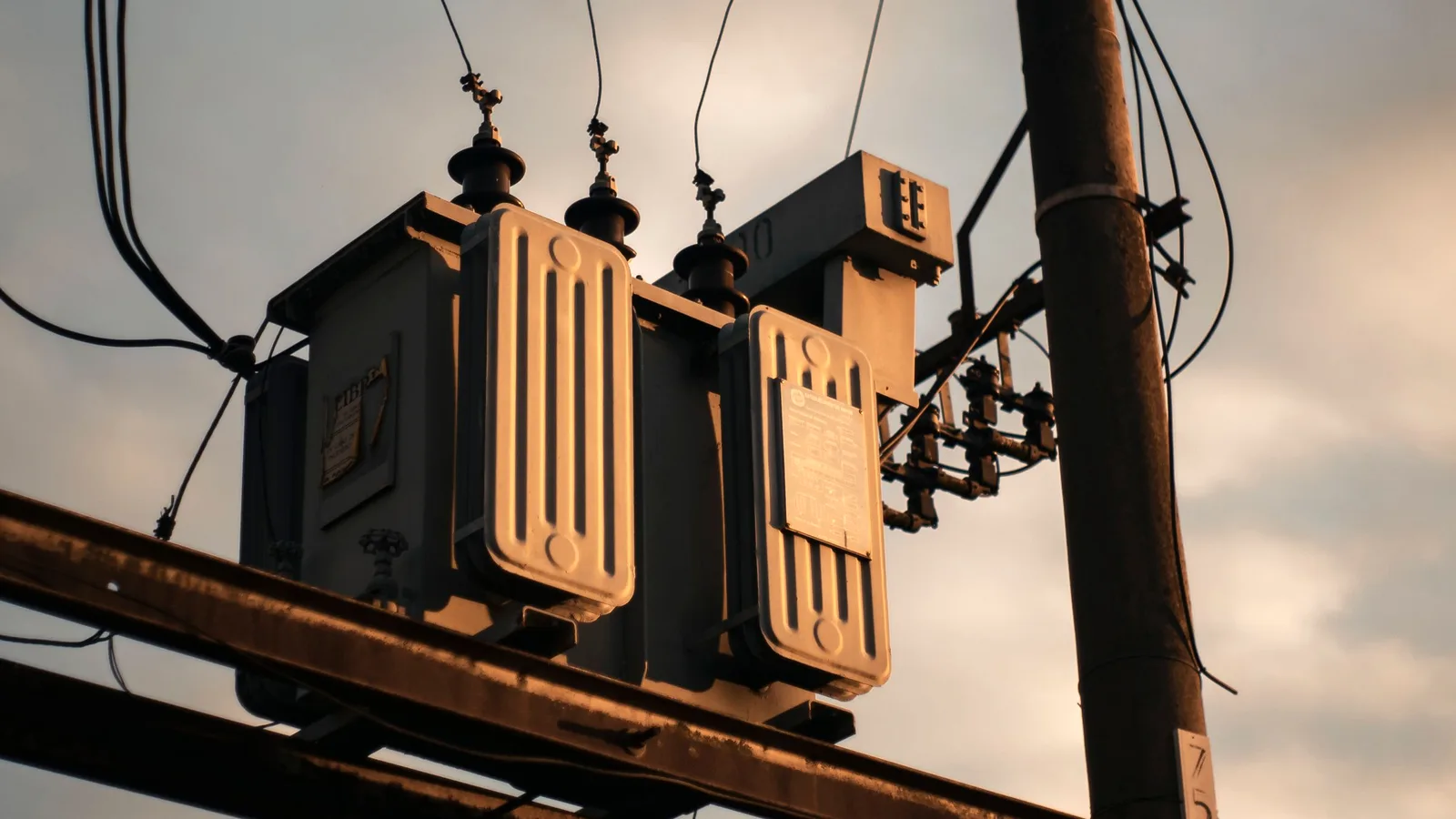
When a transformer fails, people usually suspect the windings, the bushings or overload. Yet behind many failures is the fluid: wet, acidic, sludged, or simply wrong for the operating conditions. Transformer oil is the transformer’s insulation, its cooling system and its health record at the same time.
What is a transformer?
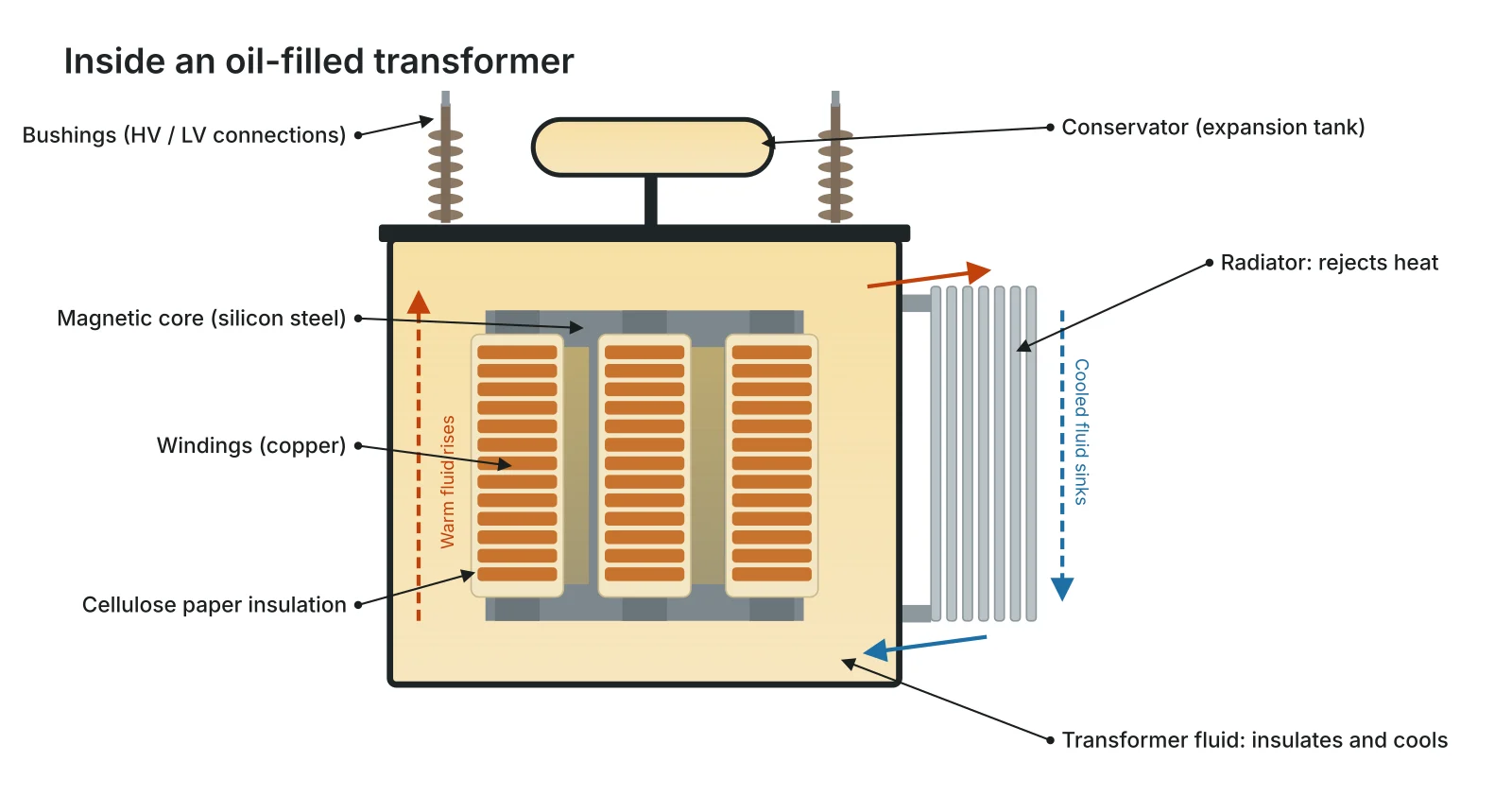
A transformer converts electrical energy from one voltage level to another. Power is stepped up to high voltage for efficient transmission and stepped down again for cities and factories. Its main parts are a magnetic core of silicon steel, copper or aluminium windings, cellulose paper insulation, and a tank with radiators and a conservator.
What does transformer oil do?
- Electrical insulation between high-voltage windings, core and tank.
- Cooling: it carries heat from the windings to the radiators, which largely sets how much load the unit can carry.
- Protecting the paper: the paper insulation sets the transformer’s life and cannot be renewed once aged.
- Diagnosis: oil analysis and dissolved gas analysis (DGA) reveal overheating, partial discharge or arcing without opening the tank.
The most common problems in the field
- Moisture lowers breakdown voltage and accelerates paper ageing.
- Oxidation, acidity and sludge block cooling ducts and raise temperatures further.
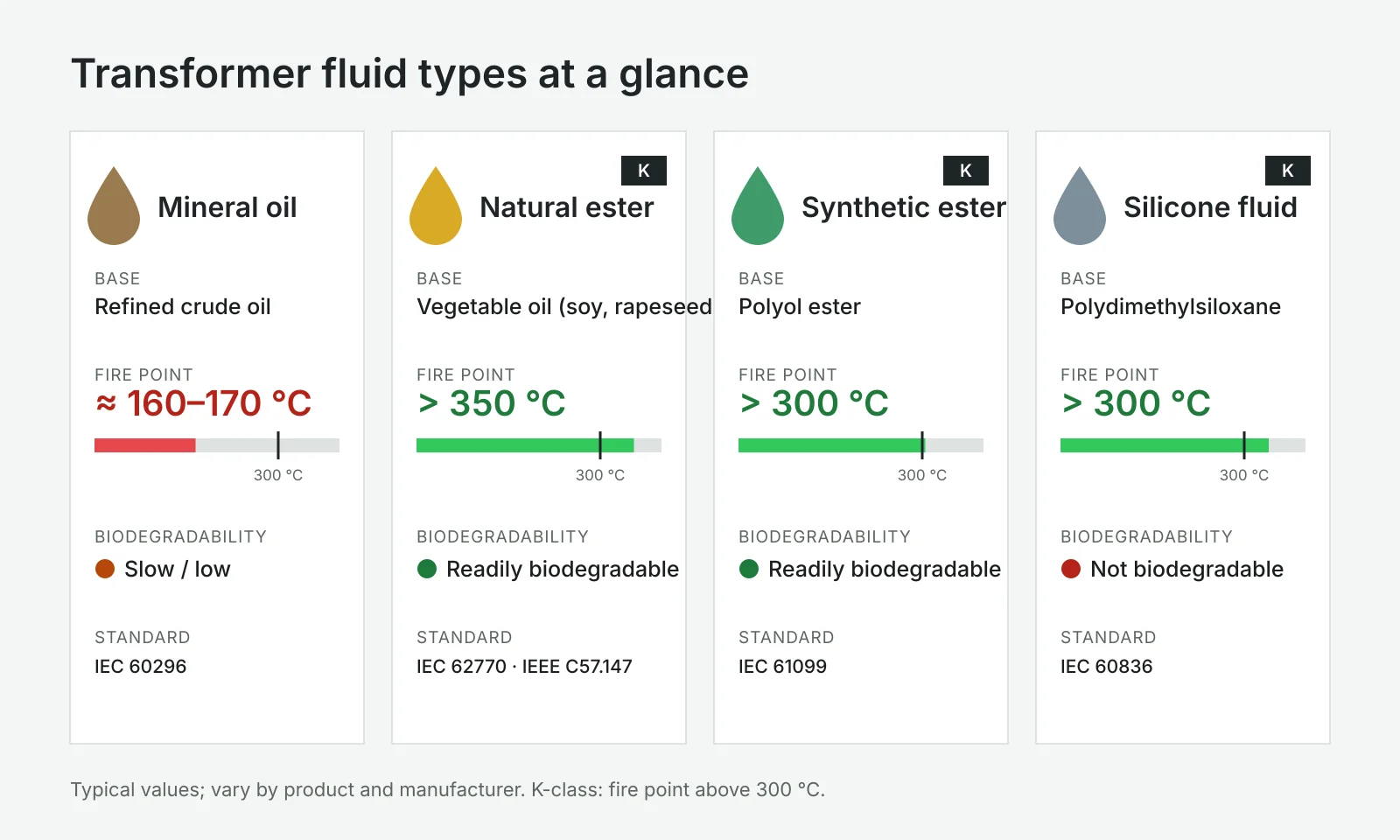
- Fire: mineral oil has a fire point of about 160–170 °C; a tank rupture after an internal fault can ignite it.
- Pollution: leaked mineral oil biodegrades slowly and is costly to clean up.
- Overload and heat in summer peaks, solar and wind plants and growing grids.
- Cold climates where some fluids thicken.
- Undocumented fluid stored in open or wet packaging.
This is why buyers look for high-quality transformer oil: the fluid is the cheapest part of a transformer, but the wrong one causes the most expensive failures.
Types of transformer fluid
| Fluid | Strength | Watch out for |
|---|---|---|
| Mineral oil (IEC 60296) | Economical, widely used | Low fire point, slow biodegradation, moisture-sensitive |
| Natural ester (IEC 62770) | K-class, extends paper life, biodegradable, renewable | Sealed or conservator designs recommended to limit air contact |
| Synthetic ester (IEC 61099) | K-class, very high oxidation stability, fluid to −50 °C | Higher initial cost than mineral oil |
| Silicone fluid (IEC 60836) | K-class, thermally stable | Not biodegradable, high cost |
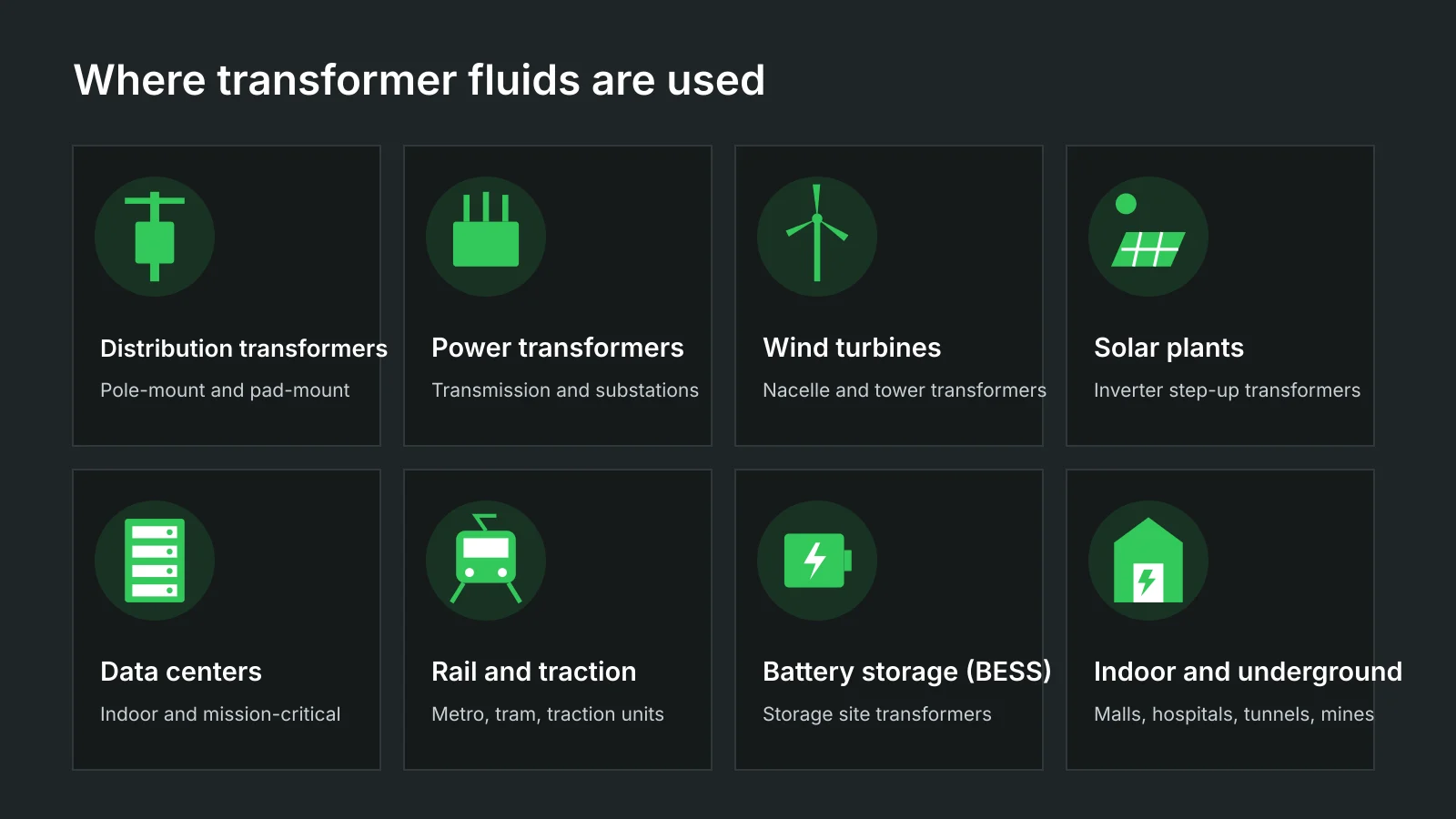
Where transformer fluids are used
What makes a high-quality transformer fluid?
- High breakdown voltage (IEC 60156) and low water content (IEC 60814)
- Low acidity and dielectric dissipation factor
- High oxidation stability
- High flash and fire points; K-class above 300 °C
- Compliance with IEC 60296, IEC 62770 / IEEE C57.147 or IEC 61099
- Biodegradability
- Reliable supply: sealed, dry, traceable packaging with a certificate of analysis
Transformer fluids supplied by Oilsan
Oilsan supplies the ester fluid family used for more than 30 years in over 5 million transformers worldwide. All three are produced in Dilovası, Türkiye, and shipped across Türkiye and worldwide.
- FR3® Natural Ester: soy-based, fire point above 350 °C, K-class.
- FR3r™ Natural Ester: rapeseed-based, about 10x the moisture saturation of mineral oil, up to 8x longer paper life (manufacturer data).
- SE3® Synthetic Ester: fire point above 300 °C, fluid down to −50 °C, 800-hour oxidation test. Shipped from stock in IBCs (910 kg, about 960 litres), quoted in 1 IBC and multiples.